About Stephen Dexter
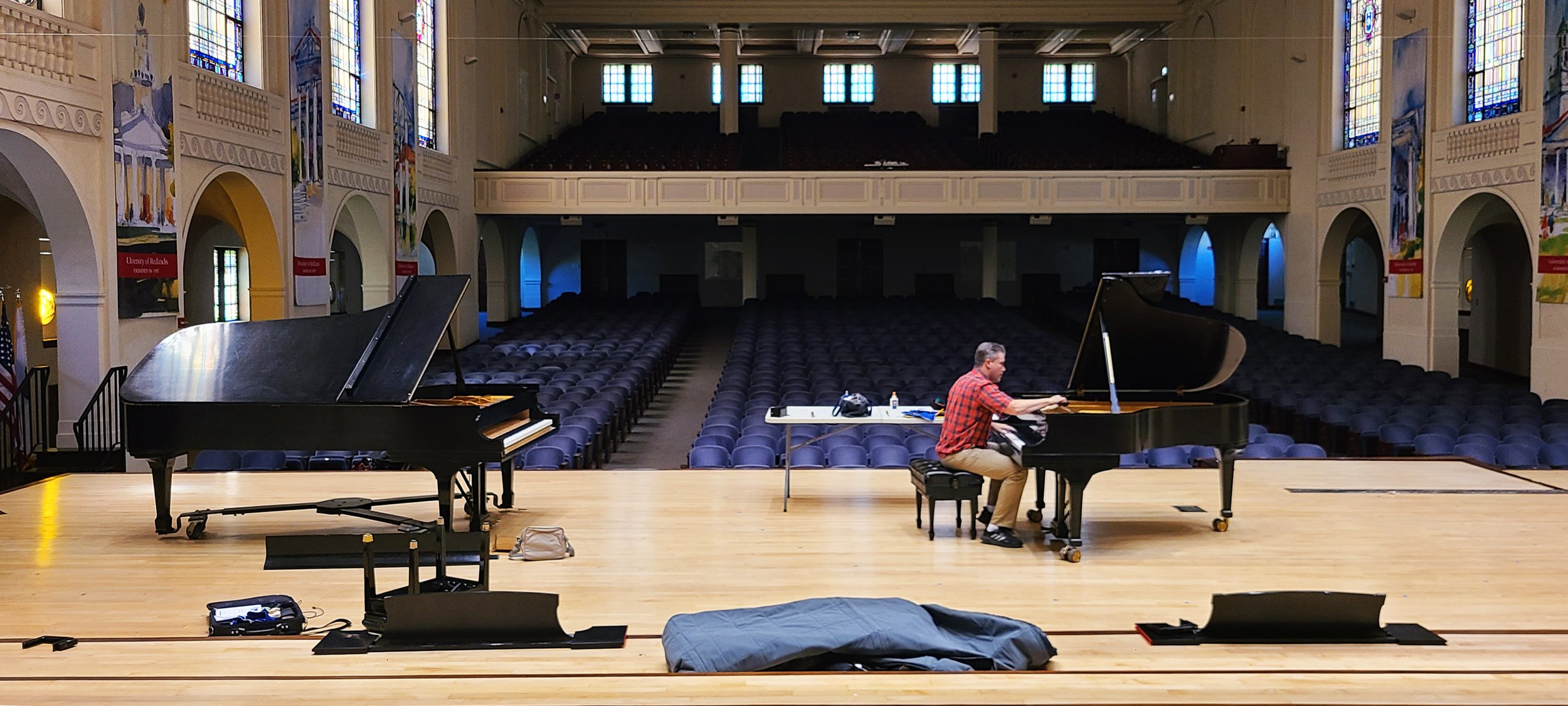

I’m Stephen Dexter, RPT, Senior Piano Technician at Northern Arizona University’s Kitt School of Music, an All-Steinway School. I care for pianos in Flagstaff and Sedona, from family instruments to concert grands.
A foundation in music and craft
I grew up in a musical family, surrounded by classical music and an appreciation for the people who make it. My uncle, a piano technician with more than 50 years of experience, taught me aural tuning—tuning by ear—and concert voicing.
I continued that training through a true apprenticeship at a respected piano rebuilding shop, where I lived for several years. Living at the shop immersed me in the daily work of tuning, repair, and complete piano rebuilding.
Aural tuning: the skill of tuning by ear
I was trained to tune by ear. Aural tuning means listening closely to the relationships between notes—called intervals—and to the strings sounding together within each note. I use those relationships to assess and refine the tuning across the whole instrument.
For my concert work, this skill is essential: I need to hear what a pianist is hearing, identify what needs attention, and make precise corrections. Electronic tuning devices can be useful tools, but following a display without being able to assess the result by ear can leave musical inconsistencies unrecognized and uncorrected.
Customers sometimes tell me they don’t know how to judge tuning, yet notice that their piano “sings” more after my visit. You don’t need technical vocabulary to appreciate that difference. My goal is a piano whose notes work together with clarity, resonance, and a singing quality.
Why verified qualifications matter
You shouldn’t need to be a piano technician to choose one confidently. Technical language and a reassuring explanation can sound convincing, while the quality of the work is harder to judge.
The Registered Piano Technician credential provides an independent standard. Earning it requires passing three Piano Technicians Guild examinations covering piano knowledge, tuning, and practical repair and regulation skills—approximately nine hours of testing. RPT candidates must also demonstrate tuning by ear without electronic assistance. Guild membership alone does not confer this qualification.
In my practice, I regularly correct problems left by previous servicing. Some are not immediately obvious to the owner, yet affect how the piano sounds, responds, or holds its tuning. Thorough training and experienced feedback help a technician recognize those problems and understand the consequences of an adjustment.
My work combines RPT certification, a substantial rebuilding-shop apprenticeship, and concert preparation informed by direct feedback from professional pianists. I bring that same careful assessment to your piano and explain what I find in language you can understand.
At Northern Arizona University, my work supports performances in Kitt Recital Hall and Ardrey Auditorium. My concert work also includes the Flagstaff Piano Festival, Flagstaff Symphony Orchestra, Sedona Symphony, Chamber Music Sedona, and other concert venues throughout Northern Arizona. Steinway calls on me to tune for its Northern Arizona concerts.
The same care at home
Whether you play professionally, are helping a child learn, or care for a piano with family history, I’ll listen to what matters to you. I’ll explain what I find, what work would help, and what it will cost—so you can make an informed decision about your instrument.

Let’s talk about your piano
Tell me about your instrument, your location, and what you’d like to improve.